
Introduction
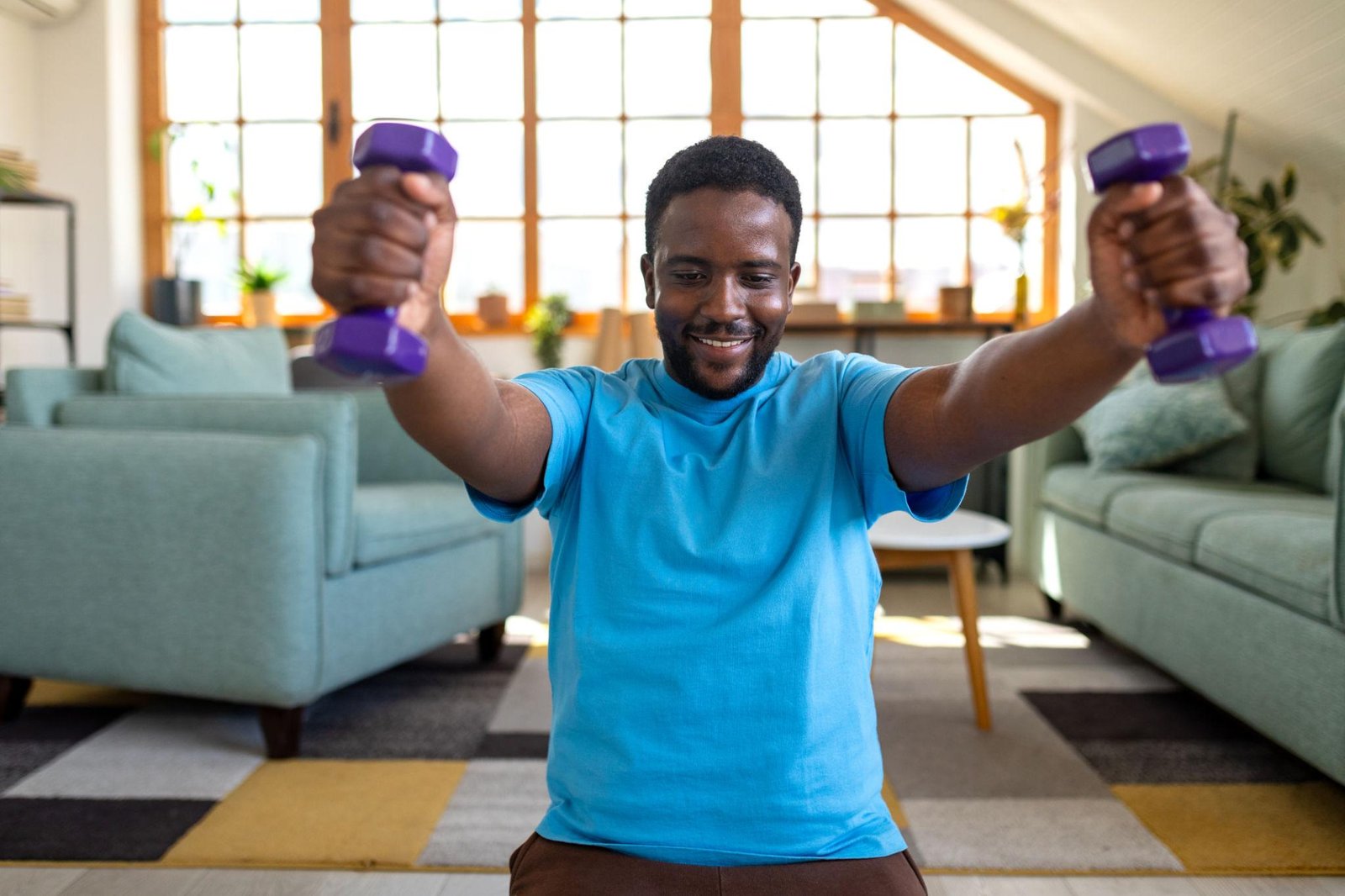
Staying fit and building a strong, healthy body does not always require an expensive gym membership. With just a pair of dumbbells and a small workout space, you can perform effective exercises at home to strengthen your muscles, improve endurance, and support your overall fitness.
Dumbbell workouts are among the most convenient ways to exercise because they allow you to train different muscle groups using simple movements. Whether your goal is to build muscle, improve strength, maintain a healthy weight, or develop a more active lifestyle, dumbbells can help you achieve your fitness goals.
The best part is that you can adjust the weight according to your fitness level. Beginners can start with lighter dumbbells, while experienced individuals can gradually increase the resistance as they become stronger.
In this article, we will explore the five best dumbbell exercises you can do at home, their benefits, correct techniques, recommended sets and repetitions, and a complete weekly workout routine.
Why Choose Dumbbell Exercises at Home?
Dumbbell exercises offer several advantages for people who prefer working out at home.
1. Builds Muscle Strength
Dumbbells provide resistance that challenges your muscles. Regular training can strengthen your chest, shoulders, arms, back, legs, and core.
Unlike bodyweight exercises alone, dumbbells allow you to increase resistance gradually, helping you continue challenging your muscles.
2. Convenient and Affordable
You do not need several gym machines or expensive fitness equipment. A pair of dumbbells is enough to perform many effective exercises.
You can exercise in your bedroom, living room, or any other comfortable space.
3. Improves Balance and Coordination
Many dumbbell exercises require you to control weights independently with each hand.
This can improve coordination, stability, and muscle control.
4. Supports Weight Management
Strength training increases energy expenditure and helps maintain muscle mass.
When combined with regular physical activity and balanced nutrition, dumbbell workouts can support healthy weight management.
5. Suitable for Different Fitness Levels
Dumbbell workouts can be adjusted according to your ability.
- Beginners can use lighter weights.
- Intermediate exercisers can increase repetitions and sets.
- Advanced exercisers can use heavier weights and more challenging variations.
5 Best Dumbbell Exercises You Can Do at Home
Here are five effective dumbbell exercises that target major muscle groups and can be performed without complicated equipment.
1. Dumbbell Squats
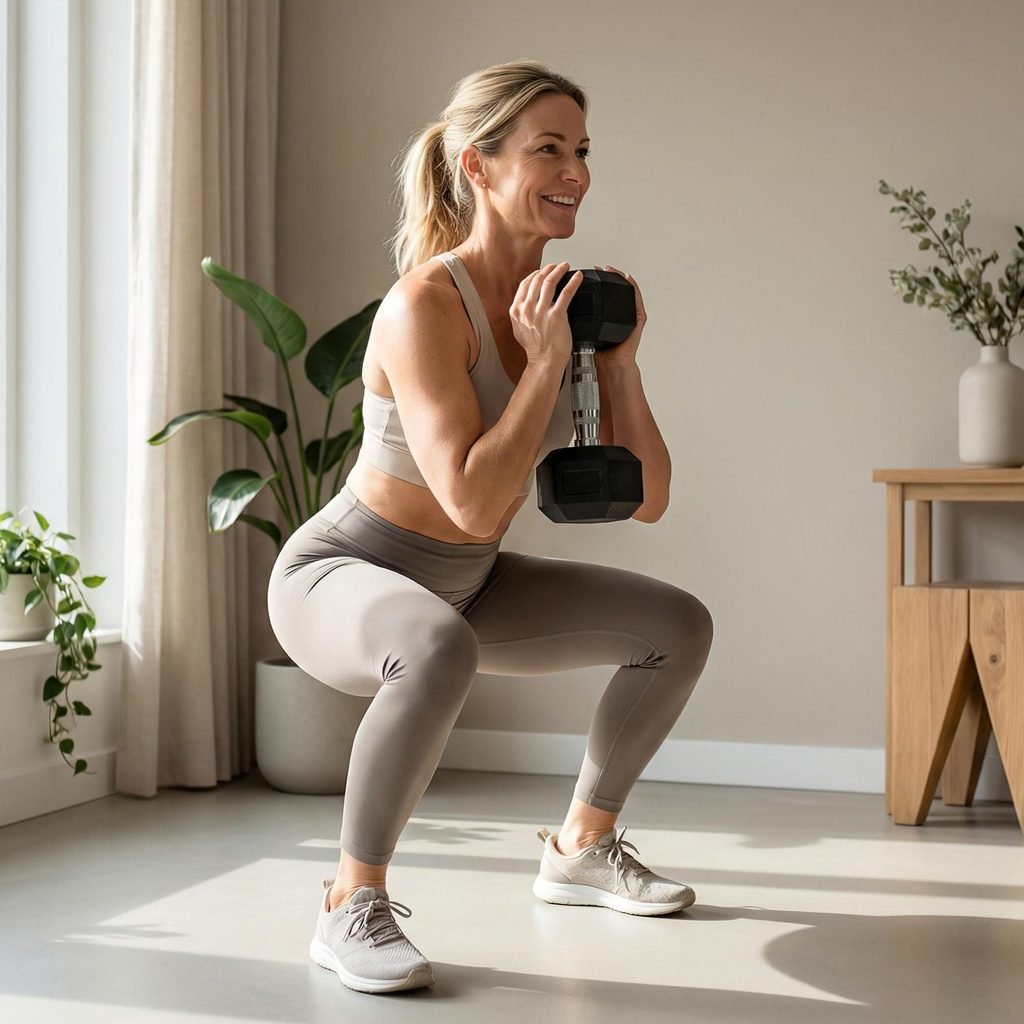
Target muscles: Quadriceps, glutes, hamstrings, and core.
Dumbbell squats are one of the best lower-body exercises you can perform at home. They strengthen your legs and glutes while also engaging your abdominal muscles for stability.
This exercise is suitable for beginners and experienced fitness enthusiasts.
How to Perform Dumbbell Squats:
- Stand with your feet approximately shoulder-width apart.
- Hold one dumbbell vertically with both hands in front of your chest, or hold a dumbbell in each hand beside your body.
- Keep your chest lifted and your back in a neutral position.
- Slowly bend your knees and push your hips backward.
- Lower your body while keeping your feet flat on the floor.
- Stop at a comfortable depth.
- Push through your feet to return to the standing position.
Recommended Sets and Repetitions:
- Sets: 3
- Repetitions: 10–15
- Rest: 45–60 seconds between sets.
Benefits of Dumbbell Squats:
- Strengthens your legs and glutes.
- Improves lower-body strength.
- Supports balance and coordination.
- Helps develop stronger hips and thighs.
- Engages your core muscles.
Beginner Tip: Start with one light dumbbell held close to your chest. Focus on maintaining good posture before increasing the weight.
2. Dumbbell Shoulder Press
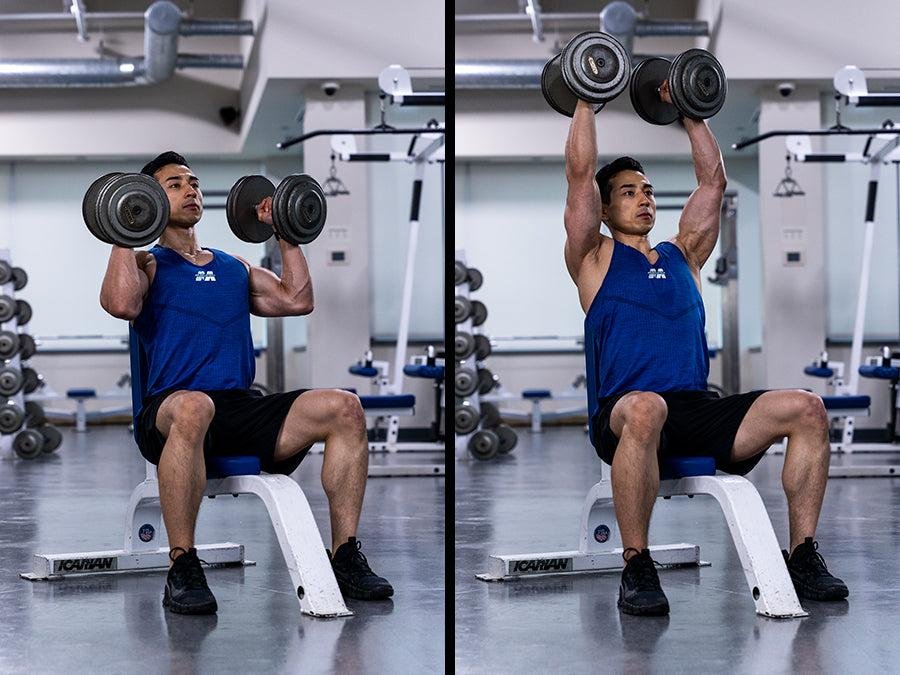
Target muscles: Shoulders and triceps.
The dumbbell shoulder press is an excellent exercise for building stronger shoulders and improving upper-body strength.
It can be performed while standing or sitting on a stable chair.
How to Perform Dumbbell Shoulder Press:
- Stand with your feet shoulder-width apart or sit upright on a stable chair.
- Hold one dumbbell in each hand.
- Bring the dumbbells to shoulder height.
- Keep your palms facing forward or slightly inward.
- Tighten your abdominal muscles.
- Slowly press both dumbbells overhead.
- Avoid locking your elbows forcefully.
- Lower the dumbbells back to shoulder level with control.
Recommended Sets and Repetitions:
- Sets: 3
- Repetitions: 10–12
- Rest: 45–60 seconds.
Benefits of Dumbbell Shoulder Press:
- Builds stronger shoulder muscles.
- Strengthens the triceps.
- Improves upper-body stability.
- Develops overhead pressing strength.
- Supports everyday movements such as lifting objects.
Beginner Tip: Choose a lightweight that allows you to perform every repetition without leaning backward or arching your lower back.
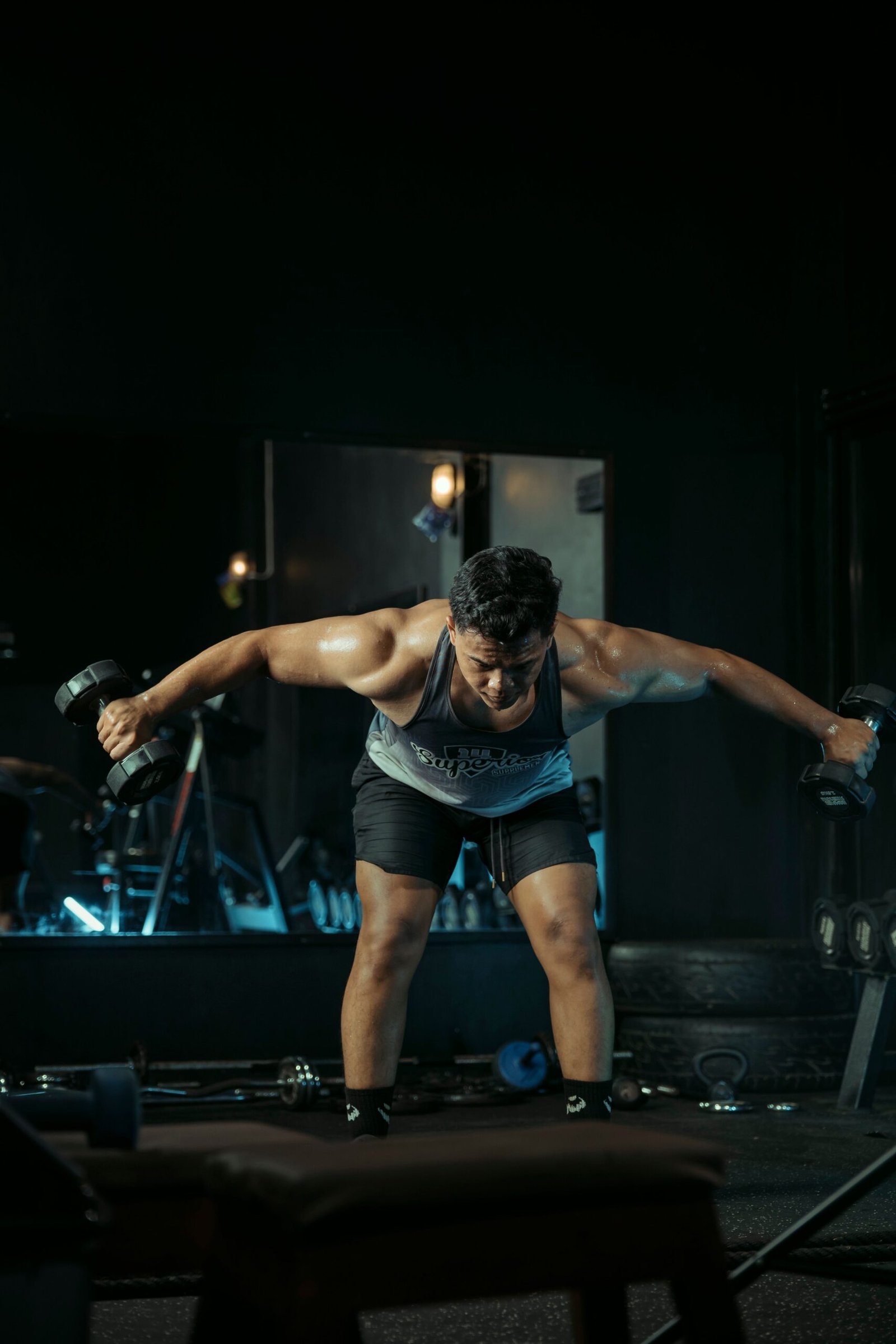
3. Dumbbell Bent-Over Rows
Target muscles: Upper back, lats, rear shoulders, and biceps.
Dumbbell rows are among the best exercises for strengthening your back.
Many people focus heavily on chest and arm exercises while neglecting their back muscles. Adding dumbbell rows to your routine helps create a more balanced upper-body workout.
How to Perform Dumbbell Bent-Over Rows:
- Stand with your feet hip-width apart.
- Hold a dumbbell in each hand.
- Slightly bend your knees.
- Push your hips backward and lean your upper body forward.
- Keep your back neutral and your abdominal muscles engaged.
- Allow your arms to hang naturally.
- Pull both dumbbells toward your waist.
- Squeeze your shoulder blades gently.
- Slowly lower the dumbbells to the starting position.
Recommended Sets and Repetitions:
- Sets: 3
- Repetitions: 10–12
- Rest: 45–60 seconds.
Benefits of Dumbbell Rows:
- Strengthens the upper and middle back.
- Develops stronger arm muscles.
- Improves pulling strength.
- Helps balance upper-body training.
- Supports better control of shoulder movements.
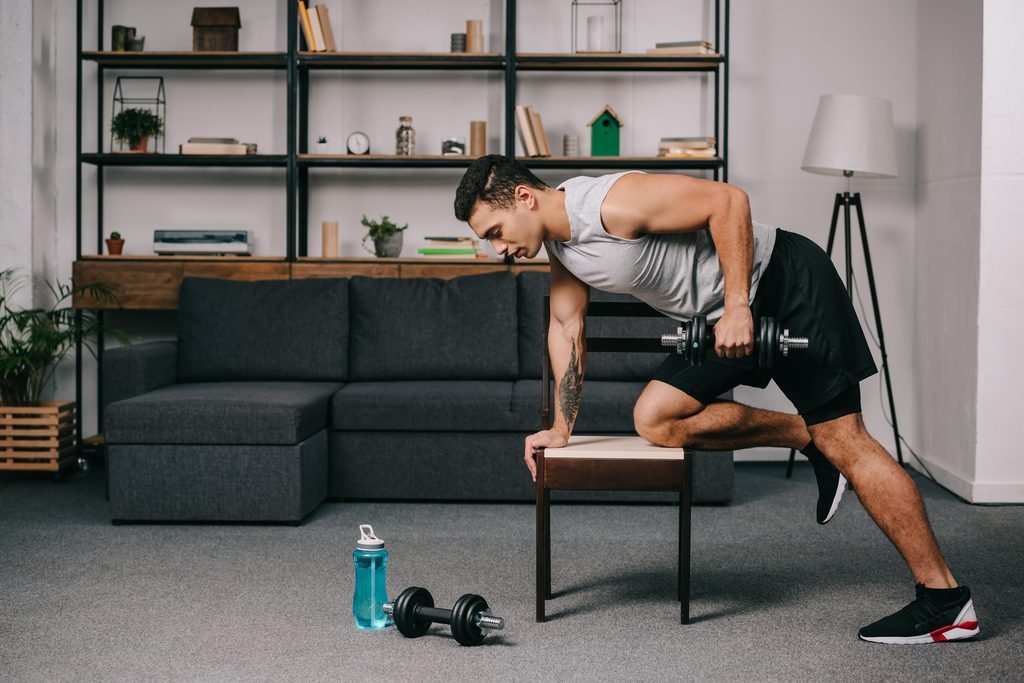
Beginner Tip: If maintaining your position is difficult, try a single-arm dumbbell row with your free hand supported on a stable chair or bench.
Avoid rounding your back or using momentum to lift the weights.
4. Dumbbell Chest Press
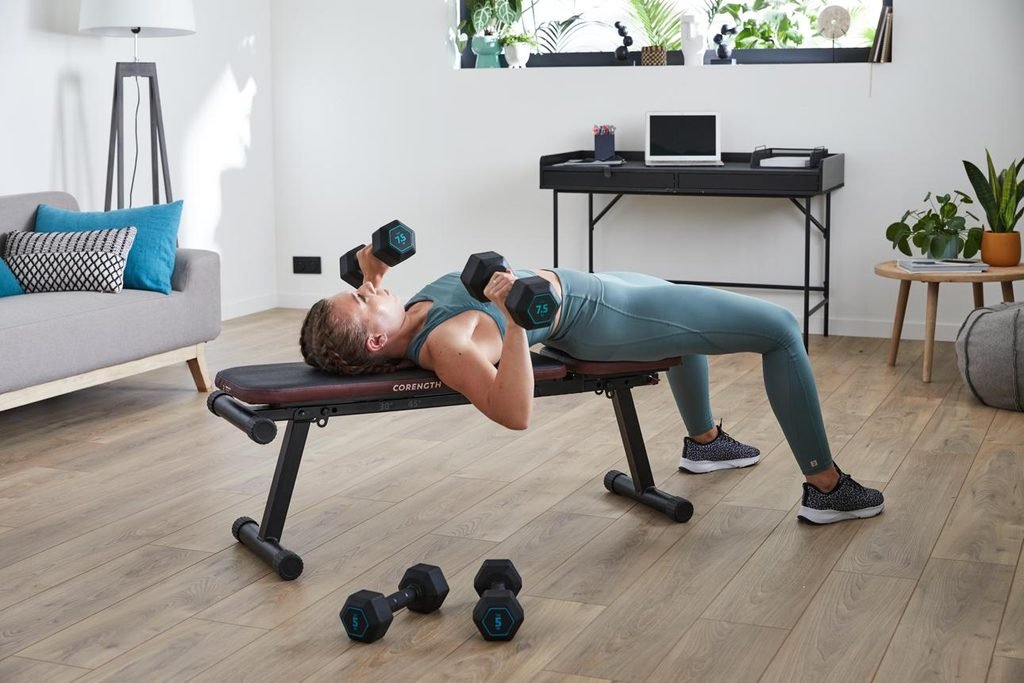
Target muscles: Chest, shoulders, and triceps.
The dumbbell chest press is an effective exercise for strengthening your upper body.
If you do not have a workout bench, you can perform the exercise on a stable exercise mat or carpeted floor.
How to Perform Dumbbell Chest Press:
- Lie on your back on the floor.
- Hold a dumbbell in each hand.
- Bend your knees and place your feet flat on the floor.
- Position your dumbbells near the sides of your chest.
- Keep your wrists straight.
- Press both dumbbells upward until your arms are extended comfortably.
- Slowly lower the dumbbells toward your chest.
- Repeat the movement while maintaining control.
Recommended Sets and Repetitions:
- Sets: 3
- Repetitions: 10–12
- Rest: 60 seconds.
Benefits of Dumbbell Chest Press:
- Strengthens the chest muscles.
- Develops the triceps.
- Improves pressing strength.
- Supports upper-body development.
- Helps build balanced muscular strength.
Beginner Tip: Start with light dumbbells and practice the movement slowly. Keep your elbows slightly away from your torso rather than flaring them excessively.
Make sure you can safely control both dumbbells throughout the exercise.
5. Dumbbell Bicep Curls
Target muscles: Chest, shoulders, and triceps.
The dumbbell chest press is an effective exercise for strengthening your upper body.
If you do not have a workout bench, you can perform the exercise on a stable exercise mat or carpeted floor.
How to Perform Dumbbell Chest Press:
- Lie on your back on the floor.
- Hold a dumbbell in each hand.
- Bend your knees and place your feet flat on the floor.
- Position your dumbbells near the sides of your chest.
- Keep your wrists straight.
- Press both dumbbells upward until your arms are extended comfortably.
- Slowly lower the dumbbells toward your chest.
- Repeat the movement while maintaining control.
Recommended Sets and Repetitions:
- Sets: 3
- Repetitions: 10–12
- Rest: 60 seconds.
Benefits of Dumbbell Chest Press:
- Strengthens the chest muscles.
- Develops the triceps.
- Improves pressing strength.
- Supports upper-body development.
- Helps build balanced muscular strength.
Beginner Tip: Start with light dumbbells and practice the movement slowly. Keep your elbows slightly away from your torso rather than flaring them excessively.
Make sure you can safely control both dumbbells throughout the exercise
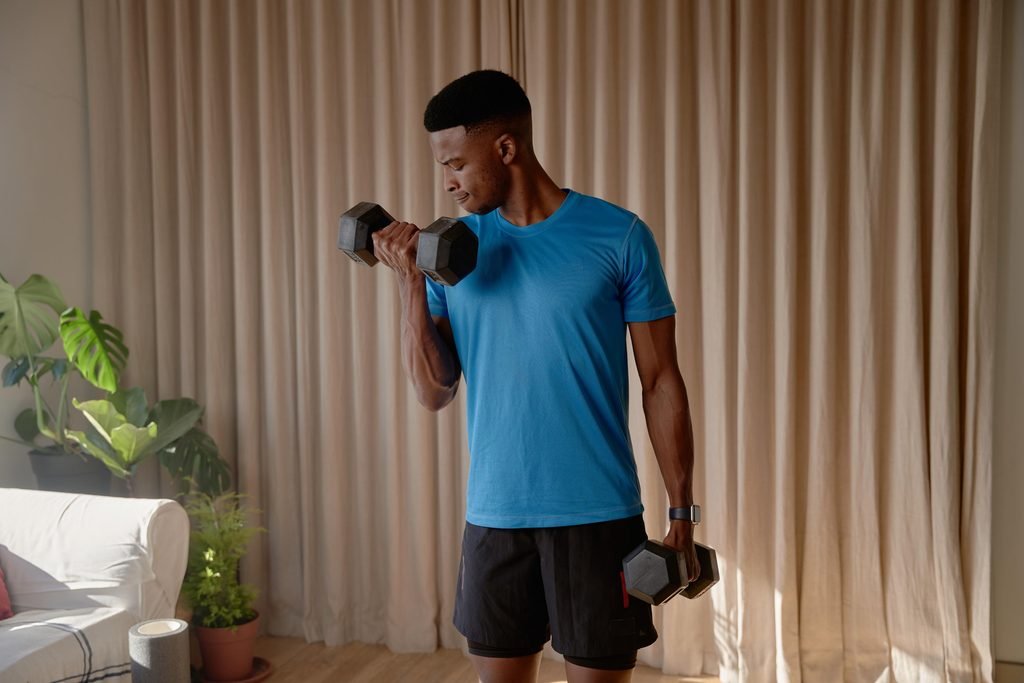
Target muscles: Biceps and forearms.
Dumbbell bicep curls are one of the most popular exercises for developing stronger arms.
They are simple to perform and require very little space, making them ideal for home workouts.
How to Perform Dumbbell Bicep Curls:
- Stand straight with your feet shoulder-width apart.
- Hold one dumbbell in each hand.
- Keep your arms extended beside your body.
- Position your palms facing forward.
- Keep your elbows close to your torso.
- Slowly bend your elbows and raise the dumbbells toward your shoulders.
- Squeeze your biceps at the top.
- Lower the dumbbells slowly to the starting position.
Recommended Sets and Repetitions:
- Sets: 3
- Repetitions: 12–15
- Rest: 45–60 seconds.
Benefits of Dumbbell Bicep Curls:
- Strengthens the biceps.
- Improves arm strength.
- Develops forearm control.
- Supports pulling movements.
- Helps improve muscular endurance.
Beginner Tip: Avoid swinging your body to lift the dumbbells. Choose a weight that allows you to complete each repetition with controlled movement.
Complete 30-Minute Dumbbell Workout at Home
Now that you understand the five exercises, you can combine them into one effective home workout.
This routine targets your major muscle groups and is suitable for beginners and intermediate exercisers who can perform the movements comfortably.
30-minute dumbbell workout
Home fitness routine5 exercises

| Exercise | Sets | Repetitions |
|---|---|---|
| Dumbbell squats | 3 | 12 |
| Shoulder press | 3 | 10 |
| Bent-over rows | 3 | 12 |
| Chest press | 3 | 10 |
| Bicep curls | 3 | 12 |
Workout structure
- Warm-up: 5 minutes
- Main workout: 20 minutes
- Cool-down: 5 minutes
Rest approximately 45–90 seconds between sets. Adjust your pace to your fitness level.
Weekly Dumbbell Workout Schedule
Following a weekly workout schedule helps you exercise consistently without overtraining the same muscles.
Here is an example of a balanced routine:
| Day | Workout |
|---|---|
| Monday | Full-body dumbbell workout |
| Tuesday | Walking and stretching |
| Wednesday | Full-body dumbbell workout |
| Thursday | Rest or light activity |
| Friday | Full-body dumbbell workout |
| Saturday | Light cardio and mobility |
| Sunday | Complete rest |
Beginners can start with two strength-training sessions per week and gradually progress to three sessions.
Allow sufficient recovery between challenging workouts.
How to Choose the Right Dumbbell Weight
Choosing the correct dumbbell weight is important for safe and effective training.
If the weights are too light, your muscles may not receive enough resistance. If they are too heavy, you may struggle to maintain proper technique.
Consider these guidelines:
Beginners
Start with light dumbbells that allow you to perform approximately 10–15 controlled repetitions.
The appropriate weight will depend on the exercise and your current strength.
Intermediate Exercisers
Once you can comfortably complete your target repetitions, gradually increase the resistance.
Advanced Exercisers
Experienced individuals can use heavier weights, more challenging variations, and controlled training techniques.
Important: You should be able to maintain proper form throughout every repetition. Never sacrifice technique simply to lift heavier weights.
Warm-Up and Cool-Down Exercises
Warming up prepares your body for resistance training, while cooling down helps you transition back to your normal activity level.
- Marching in place: 1 minute.
- Arm circles: 30 seconds.
- Shoulder rolls: 30 seconds.
- Bodyweight squats: 1 minute.
- Gentle torso rotations: 1 minute.
- Light dynamic stretching: 1 minute.
After Your Workout

Spend approximately five minutes on comfortable stretches:
- Chest stretch.
- Shoulder stretch.
- Triceps stretch.
- Hamstring stretch.
- Quadriceps stretch.
Hold each stretch gently for approximately 15–30 seconds without bouncing.
Nutrition Tips for Building Muscle
Exercise alone is not enough to maximize your fitness progress. Your body also needs appropriate nutrition to support muscle recovery and development.
1. Eat Protein-Rich Foods
Protein provides the building blocks needed for muscle repair.
Include foods such as:
- Eggs.
- Chicken.
- Fish.
- Milk.
- Yogurt.
- Lentils.
- Chickpeas.
- Beans.
Try to include protein in your daily meals.
2. Include Healthy Carbohydrates
Carbohydrates provide energy for workouts and daily activities.
Good options include oats, rice, whole-wheat bread, potatoes, bananas, and other fruits.
3. Drink Enough Water
Hydration is important for exercise performance and normal body functions.
Drink water throughout the day and pay attention to fluid loss during exercise.
4. Get Enough Sleep
Muscles need time to recover after resistance training.
Most adults should aim for approximately 7–9 hours of sleep each night.
5. Maintain a Balanced Diet
Include protein, carbohydrates, healthy fats, fruits, and vegetables.
Avoid extreme diets that make it difficult to meet your nutritional needs.
Common Dumbbell Workout Mistakes to Avoid
To get the best results from your home workouts, avoid these common mistakes.
1. Lifting Too Heavy: Using weights that are too heavy can make it difficult to maintain proper form. Start with manageable resistance.
2. Moving Too Quickly: Fast, uncontrolled repetitions reduce your ability to control the weights. Perform exercises slowly and deliberately.
3. Skipping Warm-Ups: Prepare your muscles and joints before beginning demanding exercises.
4. Ignoring Rest Days: Recovery is an essential part of strength training. Give your muscles sufficient time between challenging sessions.
5. Neglecting Certain Muscle Groups: Do not train only your arms or chest. Include exercises for your legs, shoulders, and back.
6. Not Progressing: As your strength improves, gradually increase your repetitions, sets, or dumbbell weight.
7. Poor Posture: Maintain a stable body position and avoid unnecessary swinging or excessive back arching.
Safety Tips for Dumbbell Exercises at Home
Before starting your workout, remember these important safety guidelines:
- Choose dumbbells that you can control comfortably.
- Check that adjustable dumbbell plates are securely locked.
- Exercise on a stable, non-slippery surface.
- Keep your workout area clear of furniture and obstacles.
- Avoid dropping dumbbells near your feet.
- Maintain controlled movements.
- Stop exercising if you experience sharp pain, dizziness, or unusual symptoms.
- If you have an existing injury or medical condition, seek professional guidance before starting a new resistance-training program.
How Long Does It Take to See Results?
Your results depend on several factors, including your training experience, exercise frequency, nutrition, sleep, and consistency.
Here is a general progress timeline:
| Time | Possible results |
|---|---|
| 1–2 weeks | Improved exercise technique and coordination |
| 3–4 weeks | Better workout confidence and endurance |
| 5–8 weeks | Noticeable improvements in strength |
| 8–12 weeks | Potentially visible changes in muscle development |
These are general estimates, not guaranteed outcomes. Individual progress varies.
Track your dumbbell weights, repetitions, and workout consistency to monitor improvements.
Conclusion
Dumbbell exercises are an excellent way to build strength, improve muscle development, and maintain a healthy lifestyle without going to the gym.
The five best dumbbell exercises you can do at home include dumbbell squats, shoulder presses, bent-over rows, chest presses, and bicep curls.
Together, these exercises target major muscle groups and provide a balanced foundation for a home strength-training program.
Start with manageable weights, focus on proper technique, follow a consistent weekly schedule, and support your workouts with healthy nutrition and sufficient sleep.
You do not need complicated equipment or long workout sessions to make progress. A pair of dumbbells, a little space, and consistent effort can help you build a stronger and healthier body.



Leave a Reply