
INTRODUCTION
Staying fit and healthy does not always require an expensive gym membership, professional equipment, or a personal trainer. You can build strength, improve flexibility, burn calories, and develop a healthy body by exercising at home using only your body weight.
A full-body workout at home without equipment is one of the easiest and most effective ways to stay physically active. Whether you are a beginner, an intermediate fitness enthusiast, a student, a busy professional, or someone who prefers exercising at home, bodyweight exercises can help you achieve your fitness goals.
The best thing about home workouts is that you can exercise whenever you want. You do not need dumbbells, barbells, resistance bands, or machines. All you need is a little space, comfortable clothing, a water bottle, and motivation.
In this guide, you will learn about the best full-body exercises, how to perform them correctly, their benefits, and how to follow a complete workout routine at home.
Benefits of Full-Body Workouts at Home
Full-body workouts involve exercises that target different muscle groups in one training session. Instead of focusing only on your arms, legs, or stomach, you train your entire body.
Here are some important benefits of exercising at home without equipment.
1. Builds Muscle Strength
Bodyweight exercises use your own body as resistance. Movements such as push-ups, squats, lunges, and planks help strengthen different muscles.
Regular training can improve the strength of your:
- Chest
- Shoulders
- Arms
- Back
- Abdominal muscles
- Glutes
- Thighs
- Calves
As your fitness improves, you can increase repetitions, slow down movements, or choose more challenging exercise variations.
2. Helps Burn Calories
Full-body exercises activate multiple muscle groups, which can increase energy expenditure.
Exercises such as jumping jacks, mountain climbers, high knees, and squat jumps raise your heart rate and make your workout more challenging.
Combining strength exercises with cardiovascular movements can support weight management when paired with balanced nutrition.
3. Improves Cardiovascular Fitness
Your heart and lungs play an important role in maintaining overall health.
Cardio exercises such as jogging in place, jumping jacks, and mountain climbers can improve cardiovascular endurance when performed regularly.
4. Saves Time and Money
You do not need to travel to a gym or purchase expensive equipment.
A simple workout lasting 25–40 minutes can provide an effective training session. You can exercise in your bedroom, living room, or another safe area with enough space.
5. Improves Flexibility and Balance
Exercises such as lunges, standing knee raises, and controlled squats improve coordination and body control.
Stretching after exercise can also help maintain flexibility and comfortable movement.
Warm-Up Before Starting Your Workout
Never begin an intense workout without warming up. A proper warm-up prepares your muscles and joints for exercise.
Spend approximately 5–7 minutes performing these movements.
| Warm-up exercise | Duration |
|---|---|
| Marching in place | 1 minute |
| Arm circles | 30 seconds |
| Torso twists | 30 seconds |
| Leg swings | 1 minute |
| Shoulder rolls | 30 seconds |
| Light jumping jacks | 1 minute |
| Bodyweight half squats | 1 minute |
Move slowly and comfortably. Your goal is to increase your body temperature and prepare your muscles, not exhaust yourself before the main workout.
Best Full-Body Workout Exercises Without Equipment
The following exercises target your upper body, lower body, core, and cardiovascular system.
1:Jumping Jacks
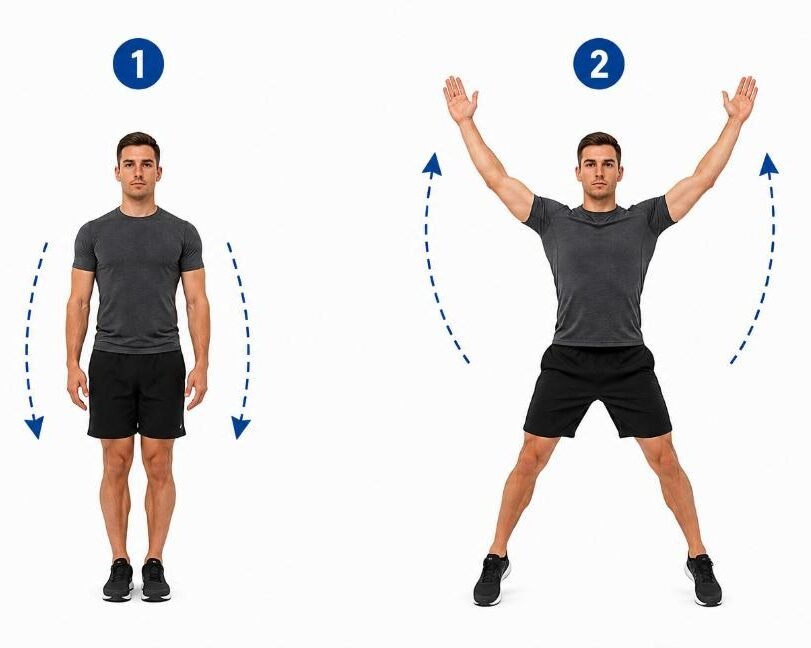
Target muscles: Legs, shoulders, calves, and core.
Jumping jacks are an excellent exercise for warming up and improving cardiovascular endurance.
How to perform:
- Stand straight with your feet together.
- Keep your arms beside your body.
- Jump while spreading your legs apart.
- Raise your arms above your head.
- Jump again and return to the starting position.
- Repeat continuously.
Recommended: 3 sets of 30 seconds.
Benefits: Improves stamina, increases heart rate, and activates several muscle groups.
If jumping is uncomfortable, perform step-out jumping jacks without jumping.
2. Bodyweight Squats
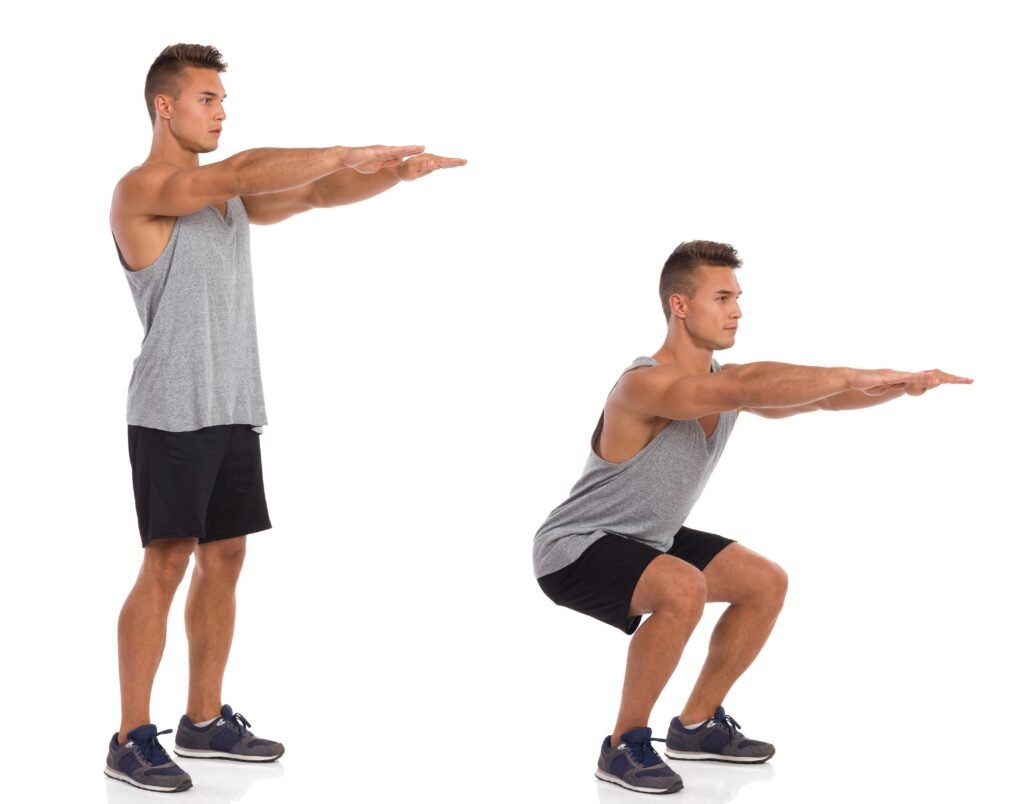
Target muscles: Quadriceps, hamstrings, glutes, and core.
Squats are among the best exercises for strengthening your lower body.
How to perform:
- Stand with your feet approximately shoulder-width apart.
- Keep your chest lifted.
- Extend your arms forward for balance.
- Bend your knees and push your hips backward.
- Lower your body as far as comfortable while maintaining control.
- Push through your feet to return to standing.
Recommended: 3 sets of 12–15 repetitions.
Benefits: Strengthens your legs, improves balance, and develops lower-body strength.
Avoid allowing your knees to collapse inward.
3. Push-Ups
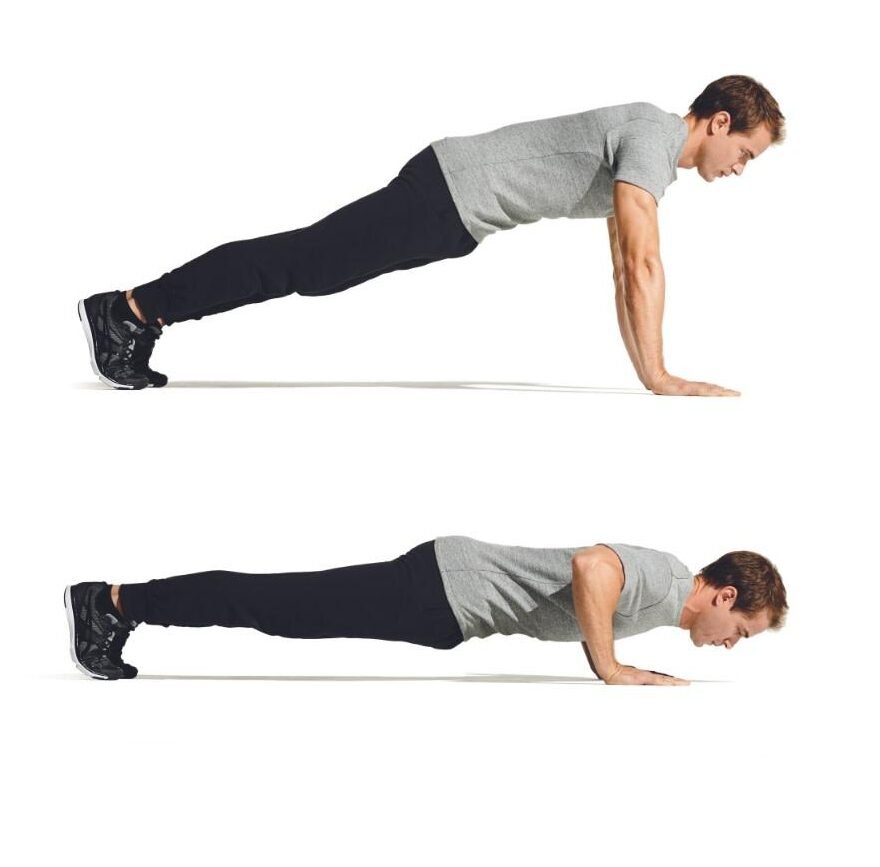
Target muscles: Chest, shoulders, triceps, and core.
Push-ups are one of the most effective upper-body exercises you can perform without equipment.
How to perform:
- Place your hands on the floor slightly wider than shoulder-width.
- Extend your legs behind you.
- Keep your body in a straight line.
- Bend your elbows and lower your chest toward the floor.
- Push through your hands to return to the starting position.
Recommended: 3 sets of 8–12 repetitions.
Benefits: Builds upper-body strength and improves core stability.
Beginner modification: Perform push-ups against a wall or with your knees on the floor.
4. Reverse Lunges

Target muscles: Quadriceps, glutes, hamstrings, and calves.
Lunges are excellent for improving leg strength and balance.
How to perform:
- Stand straight with your feet together.
- Step one foot backward.
- Bend both knees while lowering your body.
- Keep your front foot flat on the floor.
- Push through your front foot to return to standing.
- Repeat with the opposite leg.
Recommended: 3 sets of 10 repetitions per leg.
Benefits: Strengthens your lower body, improves coordination, and develops balance.
5. Plank

Target muscles: Abdominals, shoulders, back, and core.
The plank is an excellent exercise for building core stability.
How to perform:
- Lie face down on the floor.
- Place your forearms underneath your shoulders.
- Lift your body using your forearms and toes.
- Keep your body straight from head to heels.
- Tighten your abdominal muscles.
- Hold the position without allowing your hips to drop.
Recommended: 3 sets of 20–40 seconds.
Benefits: Improves core strength, stability, and posture.
Beginners can perform a knee plank.
6. Mountain Climbers

Target muscles: Core, shoulders, legs, and hip muscles.
Mountain climbers combine cardiovascular activity with core training.
How to perform:
- Start in a high plank position.
- Place your hands directly underneath your shoulders.
- Bring your right knee toward your chest.
- Extend your right leg backward.
- Bring your left knee toward your chest.
- Continue alternating legs.
Recommended: 3 sets of 20–30 seconds.
Benefits: Improves endurance, strengthens your core, and increases workout intensity.
7. Glute Bridges

Target muscles: Glutes, hamstrings, and core.
Glute bridges are particularly useful for strengthening the muscles around your hips.
How to perform:
- Lie on your back.
- Bend your knees and place your feet flat on the floor.
- Keep your arms beside your body.
- Tighten your abdominal muscles.
- Lift your hips toward the ceiling.
- Squeeze your glutes at the top.
- Slowly lower your hips.
Recommended: 3 sets of 15 repetitions.
Benefits: Strengthens your glutes, supports hip stability, and develops lower-body strength.
8. Bicycle Crunches

Target muscles: Abdominals and obliques.
Bicycle crunches help strengthen the muscles around your stomach.
How to perform:
- Lie on your back.
- Place your hands gently behind your head.
- Lift your shoulders slightly.
- Bring your right knee toward your chest.
- Rotate your upper body toward your right knee.
- Extend your right leg while bringing your left knee toward your chest.
- Alternate sides in a controlled movement.
Recommended: 3 sets of 12–16 repetitions per side.
Benefits: Improves abdominal strength and core control.
Remember that abdominal exercises strengthen your core but do not specifically burn belly fat. Overall fat loss requires a combination of activity, nutrition, and consistency.
9. Superman Exercise

Target muscles: Lower back, glutes, and posterior shoulder muscles.
The Superman exercise helps strengthen the muscles along the back of your body.
How to perform:
- Lie face down on the floor.
- Extend your arms in front of you.
- Keep your legs straight.
- Gently lift your arms, chest, and legs.
- Hold briefly.
- Slowly return to the starting position.
Recommended: 3 sets of 10–12 repetitions.
Benefits: Develops posterior muscle strength and improves body control.
Only lift as high as is comfortable. Avoid forcing your lower back into an excessive arch.
10. High Knees

Target muscles: Hip flexors, quadriceps, calves, and core.
High knees are an effective cardiovascular exercise.
How to perform:
- Stand upright.
- Begin jogging in place.
- Lift your right knee toward your waist.
- Quickly alternate with your left knee.
- Swing your arms naturally.
- Continue at a controlled pace.
Recommended: 3 sets of 30 seconds.
Benefits: Improves stamina, coordination, and cardiovascular endurance.
For a low-impact option, march in place while lifting your knees.
Complete 30-Minute Full-Body Workout Plan
Now that you know the exercises, you can combine them into a complete home workout.
This routine targets your entire body and is suitable for beginners who can comfortably perform the movements.
30-minute home workout
No equipment requiredBeginner-friendly
| Exercise | Sets | Repetitions / time |
|---|---|---|
| Jumping jacks | 2 | 30 seconds |
| Bodyweight squats | 3 | 12 |
| Push-ups | 3 | 8–10 |
| Reverse lunges | 2 | 10 per leg |
| Glute bridges | 3 | 15 |
| Mountain climbers | 2 | 30 seconds |
| Bicycle crunches | 2 | 12 per side |
| Superman | 2 | 12 |
| Plank | 2 | 20–30 seconds |
Suggested time allocation
- Warm-up: 5 minutes
- Main workout: 20 minutes
- Cool-down: 5 minutes
Rest approximately 30–60 seconds between sets as needed. The total time may vary depending on your pace and rest periods.
Weekly Full-Body Workout Schedule
Following a weekly schedule helps you stay consistent while allowing your muscles to recover.
Here is a simple seven-day routine:
| Day | Workout |
|---|---|
| Monday | Full-body strength workout |
| Tuesday | Light cardio and stretching |
| Wednesday | Full-body strength workout |
| Thursday | Active recovery or walking |
| Friday | Full-body strength workout |
| Saturday | Light cardio and core exercises |
| Sunday | Rest and recovery |
You do not need to train intensely every day. Rest is an important part of building strength and maintaining long-term fitness.
If you are a complete beginner, start with two strength sessions per week and gradually increase your training frequency.
Full-Body Workout for Beginners
If you have never exercised regularly, start slowly. Your body needs time to adapt to new physical activities.
Try this beginner-friendly routine:
| Exercise | Repetitions |
|---|---|
| Marching in place | 1 minute |
| Wall push-ups | 10 |
| Bodyweight squats | 10 |
| Glute bridges | 10 |
| Standing knee raises | 10 per leg |
| Knee plank | 15 seconds |
| Standing calf raises | 12 |
Complete one or two rounds depending on your fitness level.
As you become stronger, increase the repetitions or add another round.
The most important thing is to maintain proper technique rather than rushing through exercises.
Nutrition Tips for Better Results
Exercise is only one part of a successful fitness routine. Your eating habits also influence your strength, energy, recovery, and body composition.
Here are some practical nutrition tips.
1. Eat Enough Protein
Protein helps your body repair and build muscle tissue.
Include foods such as:
- Eggs
- Chicken
- Fish
- Milk
- Yogurt
- Lentils
- Chickpeas
- Beans
Try to include a protein source in your main meals.
2. Choose Healthy Carbohydrates
Carbohydrates provide energy for exercise and daily activities.
Good choices include:
- Oats
- Brown rice
- Whole-wheat roti
- Potatoes
- Fruits
- Vegetables
You do not need to eliminate carbohydrates to become fit.
3. Drink Enough Water
Drink water throughout the day, especially before and after exercising.
If you sweat heavily, exercise in hot weather, or train for longer periods, pay additional attention to hydration.
4. Eat Fruits and Vegetables
Fruits and vegetables provide important vitamins, minerals, and fiber.
Include foods such as bananas, apples, oranges, spinach, carrots, cucumber, and other seasonal vegetables.
5. Maintain Balanced Portions
Avoid extreme diets or skipping meals to achieve faster results.
Choose balanced meals containing protein, carbohydrates, healthy fats, and vegetables.
Common Mistakes to Avoid During Home Workouts
Many people exercise at home but do not achieve their desired results because they make avoidable mistakes.
1. Skipping Warm-Ups
Starting intense exercise without warming up can make movement uncomfortable and reduce workout readiness.
Always spend a few minutes preparing your body.
2. Poor Exercise Technique
Performing exercises incorrectly can place unnecessary stress on your joints and muscles.
Focus on controlled movements and proper alignment.
3. Exercising Too Much
Training every day without sufficient recovery can lead to excessive fatigue.
Give your muscles time to recover between challenging strength sessions.
4. Expecting Immediate Results
Fitness improvements take time. You may notice better stamina and movement before seeing visible changes in your body.
Be patient and consistent.
5. Ignoring Sleep
Sleep supports muscle recovery and overall health.
Most adults should aim for approximately 7–9 hours of sleep per night.
6. Not Increasing Exercise Difficulty
Repeating exactly the same workout forever may eventually stop challenging your muscles.
Gradually increase repetitions, sets, exercise difficulty, or movement control as your fitness improves.
How Long Does It Take to See Results?
Your results depend on your starting fitness level, exercise consistency, nutrition, sleep, genetics, and recovery.
Here is a general idea of what you may experience:
| Time | Possible improvements |
|---|---|
| First week | Better understanding of exercises |
| 2–3 weeks | Improved coordination and exercise confidence |
| 4–6 weeks | Better stamina and strength |
| 8–12 weeks | More noticeable strength and fitness improvements |
These are general expectations, not guaranteed results. Visible body-composition changes may take longer.
Take progress photos, track repetitions, and notice how comfortably you perform exercises over time.
Safety Tips for Exercising at Home
Your safety should always come first.
- Exercise on a stable, non-slippery surface.
- Wear comfortable clothing and supportive footwear when appropriate.
- Keep enough space around you.
- Avoid holding your breath during strength exercises.
- Do not force movements beyond your comfortable range.
- Stop if you experience sharp pain, dizziness, or unusual shortness of breath.
- Modify exercises if you have joint discomfort.
- Consult a healthcare professional before starting a demanding routine if you have an underlying medical condition or significant physical limitations.
Remember, exercise should challenge your body without causing unnecessary pain.
Conclusion
A full-body workout at home without equipment is an effective and convenient way to improve your physical fitness. You do not need expensive gym machines or complicated exercise programs to become stronger and healthier.
By combining jumping jacks, squats, push-ups, lunges, planks, mountain climbers, glute bridges, and other bodyweight movements, you can train your entire body in a small space.
The key to achieving long-term results is consistency. Start with simple exercises, learn the correct techniques, follow a weekly schedule, eat balanced meals, drink enough water, and allow your body to recover.
Even 20–30 minutes of regular exercise can make a meaningful difference to your fitness over time.
Start today, stay consistent, and make home workouts a healthy part of your daily lifestyle!



Leave a Reply